
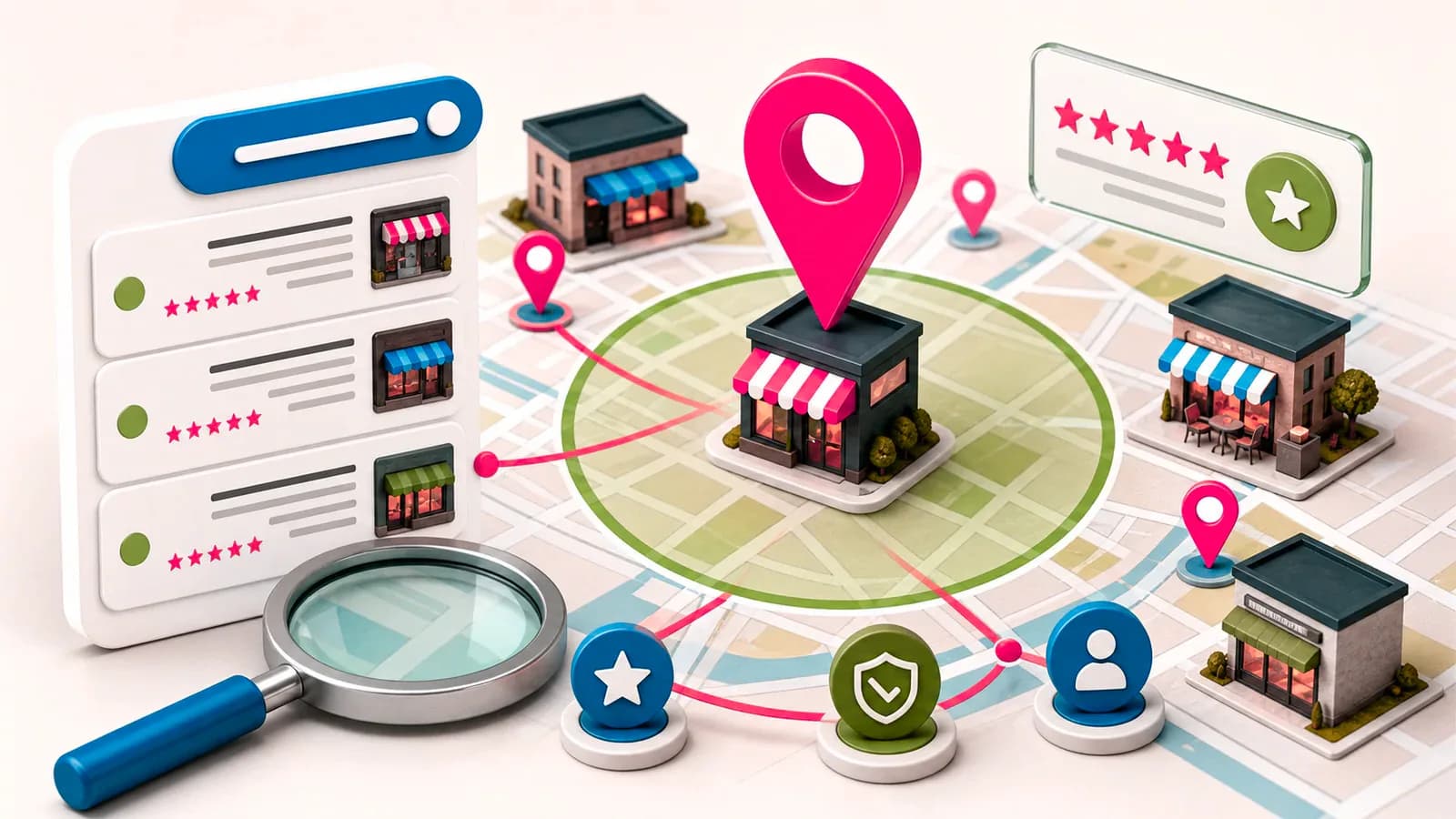
Small-business SEO is a different game from enterprise SEO — and an easier one. You are not fighting the internet; you are fighting the six other businesses in your area that sell what you sell, most of whom have never touched their schema or citations. This is the owner’s playbook: what actually moves the needle, in the order that pays fastest, sized for someone who runs a business rather than an SEO department.
“seo for small business” — 4,400 searches/mo (Google, US)Average monthly US search volume. Source: Google autocomplete demand via AnswerThePublic, 2026.
The playbook in one picture
1. Win the map first
For any business serving a physical area, the Google Business Profile outranks everything else you could do this month: it powers the map pack that fills the first mobile screen. Claim it, complete every field, choose the most specific category, add photos. The complete walkthrough is in the Business Profile guide — and the website signals that amplify it (consistent name/address/phone, LocalBusiness schema, location pages) are in the local SEO guide.
2. Get technically clean — once, then automatically
Most small-business sites leak rankings through fixable plumbing: pages Google can’t index, three-second load times, missing titles, broken links from an old redesign. You do not need to understand all of it — you need a prioritised list. Run the free audit (two minutes, no signup) and fix top-down. Then let software keep it fixed: this layer — schema, sitemaps, redirects, caching, image compression — is exactly what a good plugin automates so it never needs your attention again.
3. Build the five pages that sell
Forget publishing volume. A small business needs five pages done properly:
- Homepage — who you serve, where, and the one action to take.
- One page per core service — not a services list; a page per service, each targeting “service + area”, each with prices or ranges (the honesty ranks and converts).
- About — real people, real credentials; trust is a local ranking asset.
- Contact/booking — phone visible, form short, map embedded.
- Proof — reviews, before/afters, case stories with real place names.
4. Make reviews a system, not an event
Steady review velocity beats bursts, and responses (to every review, especially bad ones) are visible to both Google and customers. The system: ask every happy customer the same day, make the link one tap, and put replying on a weekly recurring slot.
5. Publish answers only you can write
One good local answer a month beats daily thin posts: prices in your area, how to choose a provider, what a job actually involves, problems specific to local housing stock or local regulations. These are questions with real search demand and no national competitor able to answer them credibly.
What to do first
Do first — high impact, many pages
- Claim + complete the Business Profile
- Fix indexing/speed issues from the audit
- Service pages with prices
Schedule — high impact, fewer pages
- Location pages if you serve multiple areas
- Monthly local content
Quick wins — low effort
- NAP consistency + LocalBusiness schema
- Review ask-and-reply system
- Compress your images
Deprioritise — low impact
- National keywords
- Social posting as an SEO tactic
- Chasing every directory
Start with the two-minute version of this whole article: the free audit will tell you which of these steps your site actually needs first.
Frequently asked questions
- Why is SEO important for a small business?
- Because it compounds while ads only rent. A small business that ranks for "your service + your town" gets customers every month without paying per click, and local searches carry the highest intent in marketing — people searching "emergency electrician near me" are hours from buying. The playing field is also genuinely winnable: you compete with local businesses, not the whole internet.
- How much does SEO cost for a small business?
- Three honest tiers: DIY costs your time plus modest tooling (a plugin that automates the technical layer, typically well under agency prices per month); a freelancer typically runs a setup project plus light upkeep; agency retainers make sense for competitive industries and multi-location brands. The trap is paying retainer prices for one-off or automatable work.
- How long does SEO take for a small business?
- Local results move faster than national ones: a completed Business Profile, consistent citations, and a technically clean site can show movement in weeks in low-competition areas, while competitive city-centre niches take months. Technical fixes pay fastest because they unblock value your site already has.
- Can I do SEO myself without an agency?
- For a typical local or small e-commerce business, yes — the foundation in this playbook needs no specialist background, and software now automates the parts that used to require one (schema, sitemaps, redirects, speed). Where paid help earns its fee is competitive strategy and content production at scale.
- What are the first three things a small business should do for SEO?
- Claim and complete your Google Business Profile; make sure your website passes a basic technical audit (indexable, fast, mobile-friendly, with your name/address/phone consistent everywhere); and build one genuinely good page per service you sell. Those three unlock more than everything else combined.