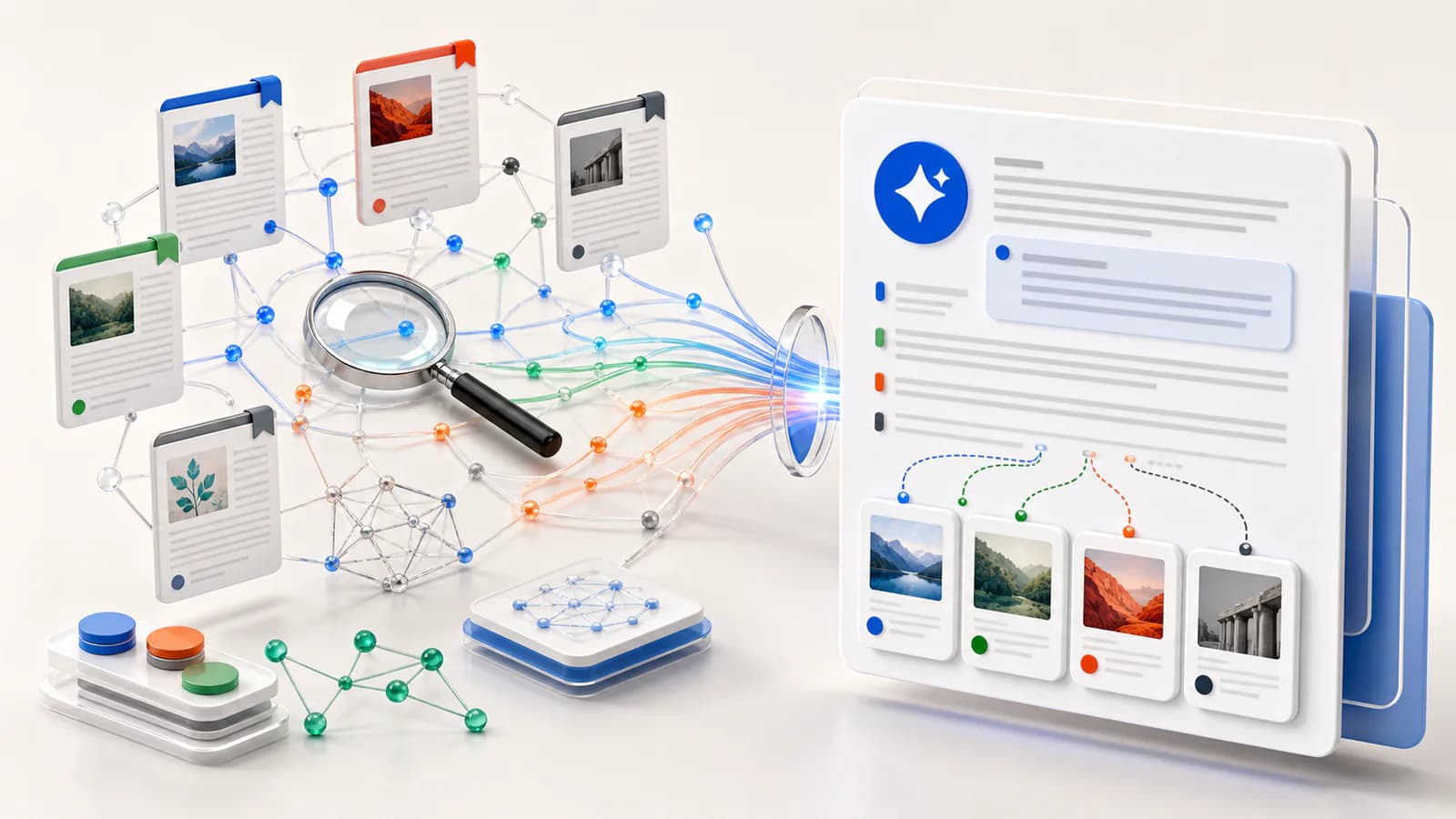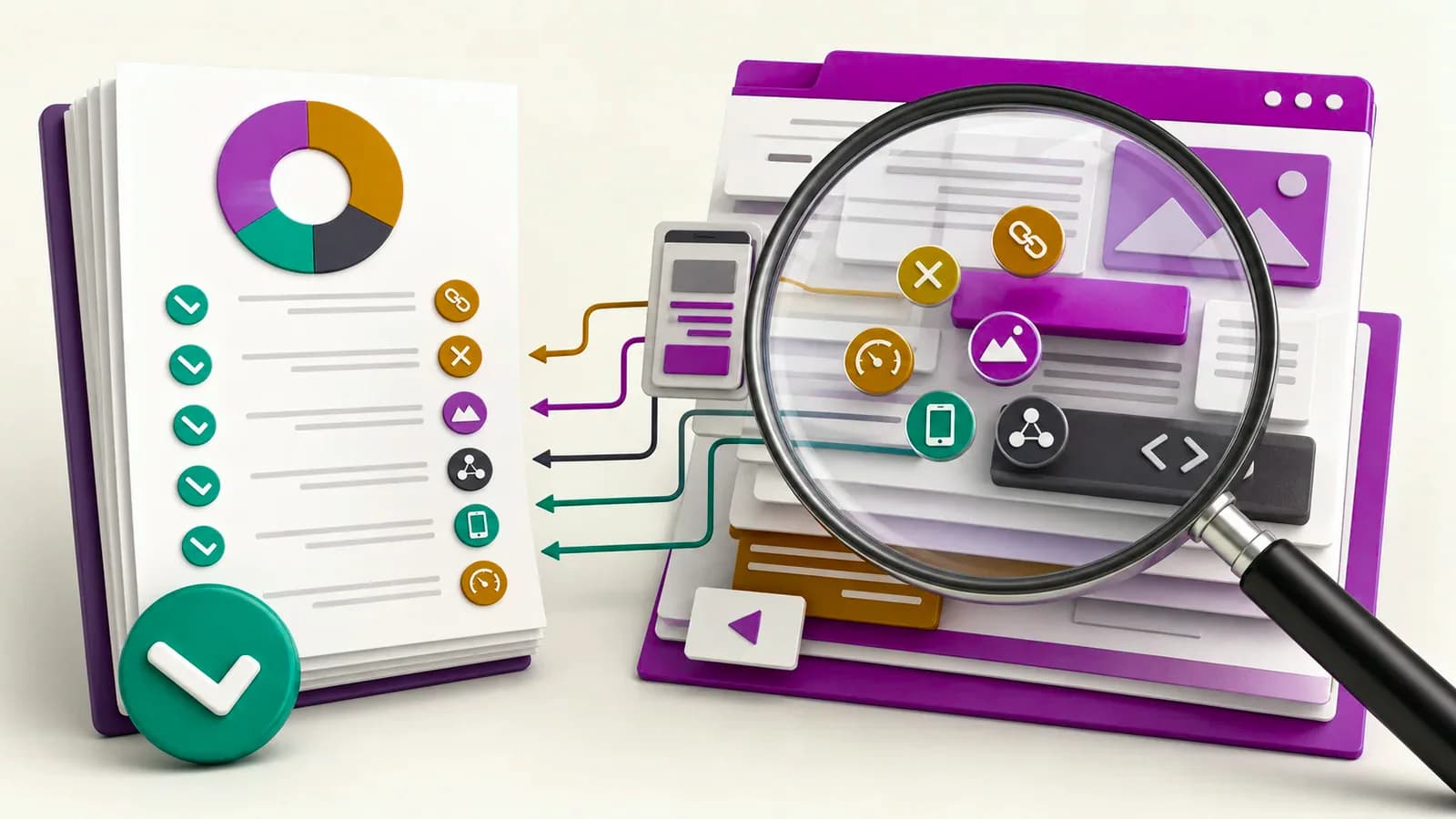

AI visibility is whether assistants name you when someone asks what to use. It is a genuinely new surface: no results page, no position, no click-through report — just whether your brand appears inside a generated answer, and whether the description is flattering. Here is how to measure it honestly, what appears to move it, and what no tool can promise.
“ai visibility tools” — 1,300 searches/mo (Google, US)Average monthly US search volume with CPC. Source: Google autocomplete demand via AnswerThePublic, 2026.
Measure it before you optimise it
- Write down the ten questions a buyer would ask an assistant — not your brand name, but “best X for Y”, “how do I choose a Z”, “what tool does W”.
- Ask each assistant from a clean session and record who gets named, in what order, and how each is described. Include the competitors — their presence is your benchmark.
- Score it simply: mentioned or not, position in the list, description accurate or not. Resist elaborate metrics; the signal is coarse.
- Watch your server logs for AI crawlers. GPTBot, Google-Extended, PerplexityBot and peers leave real entries — the only first-party evidence you have that your content is being read at all.
- Repeat monthly. One reading is an anecdote; a trend is a measurement.
What appears to influence it
Crawler access
Retrieval bots must be able to fetch you. A blanket robots.txt block removes you from answers entirely — the one own goal in this list.
Answer-shaped content
Models lift passages, not pages. A direct answer in the first two sentences is retrievable; a meandering introduction is not.
Entity clarity
Structured data stating who you are and what you sell gives assistants facts instead of prose to interpret — which is where misattribution happens.
Third-party consensus
Being described consistently across comparison pages, directories, and reviews. The least controllable and probably the most influential.
What the tools can and cannot do
A category of AI visibility trackers now exists, and the good ones do something real: run prompt panels on a schedule and chart brand mentions over time. That is genuinely more rigorous than asking ChatGPT occasionally and forming an impression.
What none of them have is ground truth. No AI provider publishes citation or impression data, so every number is sampled from prompts the vendor chose, on models that change underneath them, with answers that vary run to run. Treat the trends as directional and be sceptical of any dashboard presenting a precise “AI visibility score” as though it were measured rather than inferred.
Everything above rests on assistants being able to read you in the first place. Run the free audit to confirm nothing is blocking them.
Frequently asked questions
- What is AI visibility?
- AI visibility is how often, and how favourably, AI assistants mention your brand when answering questions in your market. Where SEO measures position in a results list, AI visibility measures presence inside a generated answer — whether ChatGPT, Gemini, or an AI Overview names you when someone asks what tool or service to use.
- How do I check if ChatGPT mentions my brand?
- The direct method is to ask it — run the buying questions your customers would ask and record whether you appear, in what position, and against which competitors. Do it consistently, from a clean session, and treat it as sampling rather than measurement, because answers vary between runs and users.
- Can I track AI visibility automatically?
- Partially. Tools now exist that run prompt panels on a schedule and record brand mentions, and server logs show which AI crawlers fetch your pages — the only hard first-party signal available. What does not exist is a Search Console equivalent: no AI provider publishes your impression or citation data, so every number is inferred.
- What actually influences whether AI mentions you?
- Observably: being crawlable by retrieval bots, answering the question directly and early on the page, having clean structured data that states your entity facts, being described consistently across the web, and existing on the comparison and recommendation pages assistants draw from. Nobody outside these companies knows the weighting.
- Is AI visibility replacing SEO?
- It is becoming a second surface alongside it, not a replacement. Traditional results still carry most commercial clicks, and AI answers are grounded in crawled web content — so the work that earns rankings largely overlaps with the work that earns citations. The difference is what you measure and how you write.